Portless.com Announces Seed Funding from eGateway Capital

Ecommerce shipping terms glossary

Shipping is where every supply chain decision shows up. The terminology spans trade law, logistics, finance, and operations, and it's rarely defined with Ecommerce context in mind. This glossary fixes that. Written for operators who need clarity fast, whether you're reviewing a freight contract, comparing fulfillment models, or navigating a tariff change.

On this page

    Shipping & freight

    How your products physically move from factory to warehouse to customer, including ocean containers, air cargo, drayage, injection models, and everything in between.

    Transit time

    Transit time is the total time a shipment takes from origin to destination. Learn how it's calculated and why it shapes Ecommerce margins.

    Shipping carrier

    A shipping carrier moves packages from origin to customer. Learn how carriers work, types, and why carrier mix matters for DTC brands.

    Shipping zone

    Learn what a shipping zone is, how carriers price by zone, and why zone-based costs quietly drain DTC margins as you scale.

    Port of entry

    A port of entry is where imports legally enter a country. Learn how it shapes Ecommerce duties, clearance, and delivery speed.

    Ocean freight

    Ocean freight moves bulk goods by sea. Learn how it works, what it costs DTC brands in cash flow, and when faster models make sense.

    Non-bonded warehouse

    A non-bonded warehouse stores goods after duties and taxes are paid. See how it compares to bonded storage and when to use it.

    FOB shipping

    FOB shipping defines when risk and cost transfer from seller to buyer. Learn what FOB means for Ecommerce brands sourcing from Asia.

    First mile delivery

    First mile delivery moves goods from factory to the first transport hub. Learn why it shapes Ecommerce lead times, cash flow, and margin.

    LTL (less than truckload)

    LTL (less than truckload) shipping moves freight that doesn't fill a trailer. Learn how it works, costs, and where it fits in Ecommerce.

    Direct injection

    Direct injection routes parcels from origin into a domestic carrier network near the customer, skipping warehousing. Here's how it works.

    Drayage

    Drayage is the short-haul trucking that moves containers from ports to warehouses. Learn what it costs, why it bottlenecks supply chains, and how to skip it.

    FTL (full truckload)

    FTL (full truckload) dedicates an entire truck to one shipment. Learn how it works, when to use it, and how it compares to LTL.

    Dimensional weight (DIM weight)

    Dimensional weight (DIM weight) is how carriers price packages by size, not actual weight. Learn the formula, impact, and how to reduce DIM costs.

    Freight forwarder

    A freight forwarder coordinates the movement of goods across borders. Learn what they do, what they don't, and why direct fulfillment skips them.

    Container load

    What is a container load? Learn how FCL and LCL shipping work, what they cost DTC brands, and why air freight often beats both.

    Container freight station (CFS)

    A container freight station (CFS) consolidates and deconsolidates LCL ocean freight. Learn how CFS works and why direct fulfillment skips it entirely.

    Bonded warehouse

    A bonded warehouse lets you defer duties on imported goods until they're sold or re-exported. Here's how it works and when it pays off.

    Zone skipping

    Zone skipping consolidates parcels past carrier zones to cut shipping costs. Learn how it works, when it pays off, and where it falls short.

    Freight shipment

    Freight shipment explained: what counts as freight, modes, costs, and why DTC brands are moving past bulk freight models.

    Bill of lading (BOL)

    A Bill of Lading (BOL) is a legal shipping document serving as receipt, contract, and title. Learn how it works in Ecommerce supply chains.

    Air injection

    Air injection is a cross-border fulfillment model that flies goods from origin and hands them to a domestic carrier for last-mile delivery.

    Supply chain

    What is a supply chain in Ecommerce? Break down the 7 stages from sourcing to returns, plus how each one affects your cash cycle and margins.

    Customs & compliance terms

    The regulatory layer of cross-border commerce: tariffs, duties, trade programs, and the compliance frameworks that determine what you pay (or don't) to move goods across borders.

    Merchant of record (MOR)

    Learn what a merchant of record (MOR) is, what they handle, and how the model affects DTC brands selling cross-border.

    OSS VAT

    OSS VAT lets Ecommerce sellers file one EU-wide VAT return instead of registering in each country. Here's how it works.

    VOEC

    VOEC is Norway's VAT on Ecommerce scheme. Learn how it works, who must register, and what it means for DTC brands shipping to Norway.

    IOSS

    IOSS lets non-EU sellers collect VAT at checkout on orders under €150. Here's how it works for DTC brands shipping into the EU.

    Importer of record (IOR)

    Learn what an importer of record (IOR) is, who can serve as one, and why the role matters for DTC brands shipping cross-border.

    VAT ecommerce

    VAT ecommerce explained: how cross-border VAT works, IOSS and OSS schemes, registration thresholds, and what brands shipping internationally owe.

    Incoterms

    Incoterms define who pays, who ships, and who carries risk in cross-border trade. Here's what every DTC operator needs to know.

    UK VAT

    UK VAT explained for DTC brands shipping into Britain — rates, thresholds, registration rules, and how direct fulfillment affects compliance.

    Transaction value

    Transaction value is the price paid for goods sold for export, used by customs to calculate duty. Here's what it means for Ecommerce brands.

    Type 86

    Type 86 is the US customs entry type for low-value Section 321 shipments requiring PGA review. Here's how it works.

    Harmonized system code (HS code or HTS code)

    What an HS code (HTS code) is, how it determines your duty rate, and why getting classification right protects Ecommerce margins.

    Tariff deferment

    Tariff deferment lets you delay import duty payments until goods sell. See how it works, who qualifies, and how it protects cash flow.

    Free trade zone (FTZ)

    A free trade zone (FTZ) lets you defer or reduce duties on imported goods. Here's how FTZs work and where they fit in Ecommerce.

    Tariff engineering

    Tariff engineering is the legal practice of designing products to qualify for lower duty rates. Learn how it works and where it fits.

    First sale law

    First sale law lets importers use the manufacturer's price for duty calculation. Learn how it works, who qualifies, and what it means for Ecommerce.

    Tariff

    A tariff is a tax on imported goods. Learn how tariffs affect Ecommerce margins, cash flow, and supply chain strategy.

    Section 321

    Section 321 is the US de minimis rule for duty-free shipments under $800. Learn how it works, what's changed, and what it means for DTC brands.

    FCA (free carrier)

    FCA (Free Carrier) defines when seller responsibility ends and buyer's begins. Learn how it works and when to use it.

    EXW (ex works)

    EXW (Ex Works) shifts all shipping cost and risk to the buyer from the factory door. Here's what it means for DTC brands.

    EAS

    EAS is the EU's Export Accompanying System for tracking goods leaving the EU. Learn how it affects Ecommerce brands and compliance.

    Duty drawback

    Duty drawback lets importers recover up to 99% of duties paid on goods later exported. Learn how it works and where it falls short.

    Delivered duty paid (DDP)

    Delivered duty paid (DDP) means the seller covers all duties and taxes before delivery. Learn how DDP works and why it matters for DTC brands.

    Delivered duty unpaid (DDU)

    Delivered duty unpaid (DDU) means the buyer pays import duties on arrival. Learn how DDU works and why it hurts DTC conversion.

    De minimis threshold

    What the de minimis threshold means, how recent changes affect DTC brands, and how to protect margins when every shipment now triggers duty.

    DDP shipping

    DDP shipping means the seller pays all duties and taxes before delivery. Learn how it works, why it matters for DTC brands, and when to use it.

    CBP

    CBP (U.S. Customs and Border Protection) enforces import laws, collects duties, and clears shipments. Here's what Ecommerce brands need to know.

    CUSMA

    CUSMA governs tariff-free trade between Canada, the US, and Mexico. Here's what it means for Ecommerce brands sourcing and selling cross-border.

    Fulfillment & last-mile terms

    Everything that happens once inventory is in-country: warehousing, pick-and-pack, carrier selection, delivery speed, and the operational models that get orders to doorsteps.

    Wholesale fulfillment

    Wholesale fulfillment explained — how bulk B2B orders are picked, packed, and shipped, and how it differs from DTC fulfillment.

    Split shipment

    What is a split shipment? Learn why orders ship in multiple packages, what it costs your brand, and how to reduce splits.

    Reverse logistics

    Reverse logistics is the process of moving returned goods back through the supply chain. Learn how it works and why it eats DTC margins.

    Pick and pack

    Pick and pack is the warehouse process of selecting and packaging items for shipment. Learn how it affects fulfillment cost, speed, and accuracy.

    Multi-node fulfillment

    Multi-node fulfillment explained: how distributed inventory works, when it makes sense, and why it locks up cash for growing DTC brands.

    Order management system (OMS)

    An order management system (OMS) tracks orders across channels, inventory, and fulfillment. See how it works and why it matters.

    Kitting and assembly

    Kitting and assembly explained for DTC brands — how it works, when to use it, and why direct fulfillment changes the math.

    Last mile delivery

    Last mile delivery is the final step from carrier hub to customer door. Learn how it works, why it costs so much, and how to fix it.

    Fulfillment center

    A fulfillment center is a warehouse built for Ecommerce order processing. Learn how it works, what it costs, and why direct fulfillment beats it.

    3PL

    A 3PL is a third-party logistics provider that handles warehousing and fulfillment. Learn how 3PLs work and where they fall short.

    Fulfilled by merchant (FBM)

    Fulfilled by merchant (FBM) means the seller handles storage, packing, and shipping for Amazon orders. Learn how FBM works and when to use it.

    EDI (electronic data interchange)

    EDI (electronic data interchange) explained for DTC brands: what it is, how it works, and why it matters for wholesale and 3PL operations.

    Fulfilled by Amazon (FBA)

    Fulfilled by Amazon (FBA) lets sellers outsource storage, picking, packing, and shipping to Amazon. See how it works and its tradeoffs.

    Dropshipping

    Dropshipping is a fulfillment model where suppliers ship directly to customers. Learn how it works, its limits, and better alternatives.

    DTC fulfillment

    DTC fulfillment is how Ecommerce brands ship orders directly to consumers. Learn how it works, cost drivers, and how to scale it.

    Batch fulfillment

    Batch fulfillment groups multiple orders into one pick run to cut labor cost. Learn how it works and where it breaks down.

    Direct-to-consumer (DTC)

    Direct-to-consumer (DTC) is a model where brands sell straight to end customers. Learn how DTC works, why it matters, and how it shapes Ecommerce supply chains.

    Direct fulfillment

    Direct fulfillment ships orders from the manufacturer straight to customers, bypassing 3PLs and bulk freight. Here's how it works and why it matters.

    Backorder

    Learn what a backorder is, why it happens, and how direct fulfillment from China helps Ecommerce brands avoid stockouts and protect cash flow.

    Amazon multi-channel fulfillment (MCF)

    Amazon multi-channel fulfillment (MCF) lets sellers ship non-Amazon orders from FBA inventory. See how it works, costs, and limits.

    Inventory & demand planning terms

    The math and strategy behind how much to buy, when to reorder, and how to avoid the twin killers of Ecommerce inventory: stockouts and dead stock.

    ABC analysis

    ABC analysis ranks inventory by revenue contribution so you focus capital on what matters. Learn how it works and where it falls short.

    Stockout

    A stockout means lost revenue, broken trust, and ranking penalties. Learn what causes stockouts and how direct fulfillment prevents them.

    SKU

    SKU stands for stock keeping unit — the code that tracks every product variant. Learn how SKUs drive inventory, fulfillment, and margin decisions.

    Safety stock

    Safety stock is buffer inventory that prevents stockouts. Learn how to calculate it, why it ties up cash, and how direct fulfillment cuts the need.

    Reorder point (ROP)

    Reorder point (ROP) tells you when to place a new purchase order. Learn the formula, inputs, and how lead time changes the math.

    Economic order quantity (EOQ)

    Economic order quantity (EOQ) is the order size that minimizes inventory costs. See the formula, limits, and a faster alternative for DTC brands.

    Demand forecasting

    Demand forecasting predicts future customer demand to guide inventory decisions. Learn how supply chain speed determines forecast accuracy.

    Inventory turnover

    Inventory turnover measures how fast you sell and replace stock. Learn the formula, benchmarks, and how to improve it for Ecommerce brands.

    Dead stock

    Dead stock ties up cash, fills warehouses, and kills margin. Learn what causes it and how to cut dead stock risk with direct fulfillment.

    Days of inventory outstanding (DIO)

    Days of inventory outstanding (DIO) measures how long stock sits before selling. Learn the formula, benchmarks, and how to cut DIO.

    Cash conversion cycle (CCC)

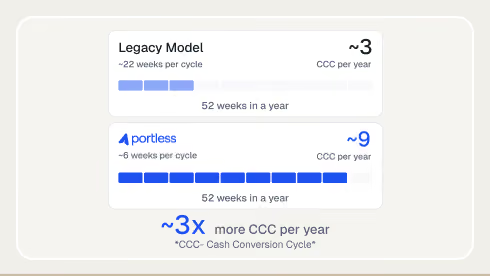
    Cash conversion cycle (CCC) measures how long your cash is locked in inventory before customers pay. Learn the formula and how to shorten it.

    Sourcing & manufacturing terms

    Upstream decisions that shape everything downstream: supplier selection, production terms, quality gates, and the documents that govern how and how much of your product gets made.

    Sell-through rate

    Sell-through rate measures how fast inventory moves. Learn the formula, benchmarks, and how direct fulfillment improves it.

    Purchase order (PO)

    A purchase order (PO) is the document that authorizes production and locks in terms with your supplier. Here's what every DTC operator should know.

    Private label

    Private label means products made by a manufacturer and sold under your brand. Learn how it works, the trade-offs, and what it means for DTC margins.

    Quality control (QC)

    Quality control (QC) for Ecommerce brands: what it is, how it works at the factory level, and why it's critical for direct fulfillment.

    Minimum order quantity (MOQ)

    Minimum order quantity (MOQ) is the smallest unit count a supplier will produce. Here's how MOQs shape cash flow, risk, and growth.

    Lead time

    Lead time is the elapsed time from order placement to delivery. Learn how it shapes Ecommerce cash flow, inventory risk, and margins.

    Bill of materials (BOM)

    A bill of materials (BOM) lists every component needed to make a product. Learn how it shapes costs, lead times, and Ecommerce supply chain decisions.

    Finance & cost terms

    The financial metrics and cost structures that connect your supply chain to your P&L, from landed cost and contribution margin to the unit economics that determine whether your brand actually makes money.

    Inventory holding cost

    Inventory holding cost is what you pay to store unsold stock. Learn the formula, what's included, and how to cut it.

    Gross margin

    Gross margin is revenue minus COGS, divided by revenue. Learn how to calculate it and protect it across your Ecommerce supply chain.

    EBITDA

    EBITDA explained for Ecommerce brands: what it measures, how to calculate it, and why your supply chain structure drives the number.

    CPM

    CPM means cost per 1,000 ad impressions. Learn how it shapes Ecommerce CAC, ad spend, and supply chain cash flow.

    Days sales outstanding (DSO)

    Days sales outstanding (DSO) measures how fast you collect cash after a sale. Learn the formula, benchmarks, and how to lower it.

    Contribution margin

    Contribution margin shows what each order actually earns after variable costs. Learn how to calculate it and why it matters for DTC brands.

    Working capital

    Working capital is cash available for daily operations. Learn how Ecommerce brands free it up by rethinking inventory and fulfillment.

    COGS

    COGS is the direct cost of producing what you sell. Learn what's included, how to calculate it, and how fulfillment shapes it.

    Profit and loss statement (P&L)

    A profit and loss statement (P&L) shows revenue, costs, and profit over time. See how it shapes Ecommerce supply chain decisions.

    Carrying cost

    Carrying cost is the total expense of holding inventory. Learn how it's calculated, what it includes, and how to reduce it.

    Cash flow

    Cash flow is the movement of money in and out of your Ecommerce business. Learn how supply chain decisions shape it — and how to fix it.

    Monthly order volume (MOV)

    Monthly order volume (MOV) is the total orders a brand fulfills per month. See how it shapes 3PL pricing, cash flow, and fulfillment strategy.

    CAC payback period

    CAC payback period measures how long it takes to recover customer acquisition cost. Learn the formula, benchmarks, and how to shorten it.

    Landed cost

    Landed cost is the total cost of getting a product from factory to customer. Learn what's included, how to calculate it, and why it matters.

    LTV

    LTV measures total revenue per customer over their lifetime. Learn how to calculate it and why supply chain decisions directly impact LTV.

    CAC

    What CAC means for DTC Ecommerce brands, how to calculate it, and why your supply chain structure changes the math.

    Balance sheet

    What a balance sheet is, why inventory dominates it for DTC brands, and how direct fulfillment changes the math.

    Average order value (AOV)

    Average order value (AOV) measures revenue per order. Learn the formula, benchmarks, and why AOV matters for Ecommerce margins.