Anthony Sardain | 00:00
There is a world where you can go from prompt to physical product. We've seen prompt to image, prompt to video, prompt to app. We're going to see prompt to physical product. You should be able to articulate what it is you want and some chain of events happens and you are able to get that product in your warehouse.
Izzy Rosenzweig | 00:20
This is The Modern Supply Chain, the show where we break down modern supply chain strategies that help e-commerce brands shift from staying above water to predictably scaling. Today's guest is Anthony Sardain, the founder and CEO of Cavela. Anthony isn't your typical tech founder. He grew up in the world of global trade watching the boots on the ground reality of manufacturing before becoming a high level data scientist. After years of building AI teams, he realized that while every other part of e-commerce have been digitized, the way we actually make products was still stuck in a mess of manual emails and text threads. Cavela is changing that by building a virtual sourcing agent that automates the hardest part of business, finding, vetting, and negotiating with the world's best factories. In this episode, we're diving into the shift from manual service to autonomous products. We'll discuss why your current supply chain is likely hiding complexity tax, how AI is moving from a chatbot you talk to to an agent that actually executes and why the future of profitable e-commerce belongs to brands that treat their sourcing like a software stack.
Izzy Rosenzweig | 01:20
Anthony, great to having the podcast. Thanks for being on.
Anthony Sardain | 01:23
Izzy, thanks for having me.
Izzy Rosenzweig | 01:24
So you have a really interesting background and I think it's actually even from more yourself from your family. So your family has been in manufacturing for a long time. Maybe give us a high level of that background. Did it start with your father, your grandfather?
Anthony Sardain | 01:38
Absolutely. So my family's originally French, but we've been in Asia for about three generations now. Everyone heavily involved in trade and manufacturing. So I was born in Malaysia. I spent most of my childhood in Southeast Asia. So this was very much a world I really grew up in when it came to doing grad school. My focus was on building AI models applied to global trade. So I still had that kind of carryover for my childhood days. And then after that, worked at various startups focusing on legacy industries, incorporating AI into how to bring these legacy industries to the modern age. And then when I kicked off Cavela, it was very much with that same spirit. There's a lot of innovation that's missing in the sourcing space. We've seen a lot of inroads in tech in other aspects of e-commerce, for instance, but very much lacking on the manufacturing side.
Anthony Sardain | 02:30
And we'll get into it, but realizing that that was a tech problem that was suddenly solvable with AI.
Izzy Rosenzweig | 02:36
Love it. Because I think to your point, a lot of the areas that get solved with either tech or AI is the software side, is the digital side. Well, where in your world and the world actually that Pearl was losing too, it's real world meets tech. So I guess if you think about your background and you wanting to start Cavela, there's a lot of areas that are broken, but is there a common or classic broken area of the business like, "Hey, I think Cavela could do a better job."
Anthony Sardain | 03:01
Yeah. I think that fundamentally it's an organizational problem. There is a lot of messy data that goes into sourcing, whether that is on the actual data side, you're kind of compiling all these docs for product spec sheets, these long email threads that spend hundreds of emails, WhatsApp groups, WeChat groups, databases that are unclean versions. All of this stuff kind of comes together and you just have this mess of data that is actually sort of I think really at the core of why supply chain and sourcing takes so long. What we found is that once we start to use AI to chip away at this organizational problem and get everything, all your ducks in a row, you could actually source reasonably quickly. We've gone with some brands from idea concept to kicking off production under a month and that's just because we're getting everything in order and using AI the right way to keep everything organized.
Izzy Rosenzweig | 03:59
I would love to peel it back a little further. So I actually happened to meet someone from LeanFunk and I was talking to them again. I'm always fascinated by anyone in supply chain and I'm like, "Oh, there's obviously one of the largest sourcing business in the world." And he's like, "No, actually we look at ourselves as data business." I'm like, "Wow, I've never..." And I think you're kind of saying this right now where sourcing is so much is equally a data problem than it is a real world problem. So what do you mean it's a data problem? Is it matching your specs to the right factory, finding the factory? Maybe you could go a little deeper what you mean that very often it's a data problem.
Anthony Sardain | 04:32
Sure. So when you're thinking about what the exercise of sourcing is, it is you are trying to capture a need of what a brand a merchant wants and you have to have a really good idea of what that is and you have to have an equally good idea of what a vendor can provide in terms of products and capabilities. And then you have to match those together and make sure they overlap perfectly as efficiently as possible. That's data. That is on the brand side, understanding what it is that a brand wants to make, what it is a factory is able to make, and to get those to Concord and agree as soon as possible.
Izzy Rosenzweig | 05:15
So it's essentially like a matchmaking data set problem. Is that at its core?
Anthony Sardain | 05:20
In a sense, that's one way to put it. The way we think about it is the way you do this traditionally is that you'll sort of draft part of a product spec and then you'll search for factories that can kind of do that and then you'll shoot them an email and go back and forth trying to nail down your own product spec, understand what the factories are able to do. They're going to try and figure out what you're trying to do. And a lot of this process of searching, compiling information, going back and forth is a very inefficient data transfer where the brand is figuring out what it is they want to make, the factory is figuring out what the brand wants to make, the brand's figuring out what the factory's able to do and they're kind of going back and forth and agreeing. It's a very inefficient way to actually go about coming to that final agreement.
Anthony Sardain | 05:58
If what you can do in an AI world, which is what we're doing, you can have AI engage with a brand, articulate exactly what it is the product has to do, has to look like with the attributes it has to have, what considerations, what certifications are needed. You can actually come out of the gate with a full complete product spec of what it is needs to be made and on the factory side, you can have a deep understanding of what they're able to do. And so suddenly that matching is near instantaneous. And certainly there's going to be some rejigging where you kind of have to make sure that those really do match up, but that becomes a lot more efficient once you have a good understanding on the data side of what the brand wants to make, what the factory's able to do and coordinate those pieces together.
Izzy Rosenzweig | 06:37
We had in the podcast a few weeks ago, let's call it an old school sourcing person. And he said he cannot explain and push customers strong enough. The ability to have a strong tech back is the difference between launching within 30 days or three months. Because if you're like loosey, goosey, like, okay, you don't really know what you want. So then you have loose specs and the facts come back with like, "What did you mean by these specs?" You have these long conversations. So I totally get that aspect. Tight, tight specs, tight, tight tech pack is a difference of like knowing what you want then allowing yourself to find the right factory.
Anthony Sardain | 07:10
I'd say that that's exactly correct because you also have to consider that part of this process is a creation of samples. One of the things that drags things out the longest is just multiple iterations of samples. If you can get everything done in one sample, then you're good to go. The problem is that in the process of figuring out what it is they want to make, brands are relying on the supplier to surface those questions to them. There's no real reason that you have to do that. That's a waste of time on the part of the supplier, that's waste of time on the part of the brand. If you can have technology, in this case, AI really help you whittle it down to precisely what it is you want, you've actually gotten your full product spec before you even had a first contact with a factory.
Izzy Rosenzweig | 07:51
I get that on the product side. How about the factory side? Most factories in China, at least not most. Many of the factories I've visited very often don't have an ERP system. Very often it could be anywhere from 200 employees to 2000 employees. Very often the 2000 employees know what they're doing, but they're also the same ones. They're not going to do business with you unless it's come through a personal referral. So there's a lot of personal relationships there from my understanding. But I guess on the data side, how are you so confident on the data side that factories are actually either giving you accurate specs or you're scraping the right specs? How do you solve that problem from the factory side or how do you approach it?
Anthony Sardain | 08:26
So I think that you have to build those relationships with factories. Part of the data that I'm referring to refers more to what other products have they made, what quotes have they serviced in the past? That allows us to benchmark, okay, this is really, they're able to make premium type products. They're able to handle this type of manufacturing, this type of transformation. A lot of that stuff is contained in the quotes they're actually surfacing to the brands. If you're able to sit between the two and collect that information, you also are able to provide a service to the factories because look, factories, let factories be factories. Factories want to manufacture products. They don't want to be spending all these resources on this admin that's doing this back and forth. If you can come to a factory and say like, "Look, I know precisely what it is we want to make and I know that you are able to make it."
Anthony Sardain | 09:08
That's time that is saved both in the part of the brand and the factories themselves.
Izzy Rosenzweig | 09:13
So would you say is that on the factory side, is that in manual vetting? You got to speak to them, relationships, get very hard data and only then if you have clean data, could the matching work really well? Is it very manually vetted from your team's perspective?
Anthony Sardain | 09:27
So I think that initially we selected a pretty sizable data set of factories that we've compiled through many different means. We do everything from past relationships with factories that we've all inherited from our past lives. We import export records is also a very good source. When you're importing the United States, you have to declare where this is coming from. So you're able to say, "Okay, this top tier brand is importing from this factory." Exporter associations that are sort of product specific. We also go to a lot of trade shows. We master a lot of this data of a large set of suppliers. What we've found is that there's actually a benefit to working with a smaller cohort of factories because what it allows you to do is to plug in much more seamlessly into their own processes and you can actually go beyond just that initial matching and the initial service level coordination and actually start to go a little bit deeper in how you coordinate with the factories themselves.
Anthony Sardain | 10:19
So we still source very broadly with that I'd say non-manual aspect when we're sort of sourcing with products that are perhaps outside of our typical wheelhouse, but to the best of our ability, we actually do try to funnel as much to a set of factories we've identified and developed very deep relationships with because that's where we can provide a much more elevated experience and a seamless sourcing experience than doing the way we're kind of like throwing a dart at a board in a sense.
Izzy Rosenzweig | 10:46
So this all logically makes sense. When did you realize like one second there's a need here. It's not just in my head. Is either a story behind that, someone you knew that a pinpoint? How did that become reality?
Anthony Sardain | 10:57
So I've spent a lot of time in Southeast Asia through my childhood. I've also lived in Latin America for about a decade and built a lot of manufacturing relationships there. And so I'd always been helping a lot of friends and family do some sourcing on the side and this kind of coincided with ChatGPT, GPT-3 coming out where I was sourcing for a luxury hotel in Thailand that was trying to make these like luxury hotel products. And at the same time, a supplements DTC brand that was a manufacturing out of India. So two very different products, very different verticals, very different use cases, same pain point and actually the same solution. I had always been tinkering with a lot of AI and suddenly found a way with GPT3 to automate this kind of very frustrating workflow that I'd been doing when I'd been reaching out to the factories and drafting the product spec.
Anthony Sardain | 11:50
And it was the same solution for these two completely different problems. And I'm like, "Oh, okay, this is suddenly there's something here." And that actually became version zero of Quavella when we started building it out and it haven't really changed in terms of the core thesis from there.
Izzy Rosenzweig | 12:04
If I hear correctly, there's like kind of two aspects to the business. One is like prompt idea creation or actually three. Then there is tech pack creation or let's call it engineering the tech pack or design of the tech pack and then there's the sourcing production itself. In the world that you're seeing evolve to you, is there just no need for designers of tech packs? Do they still have a place in this future world? How do you look at that evolving space?
Anthony Sardain | 12:27
I think that they do. Tech packs are still needed, but it's going to be case by case and factories are also just getting better at understanding what users actually want. The way I think about this is that this is kind of like a very fragmented world. There is a world where you can go from prompt to physical product, right? We've seen prompt to image, prompt to video, prompt to app. We're going to see prompt to physical product. You should be able to articulate what it is you want and some chain of events happens and you are able to get that product in your warehouse. So it's essentially a matter of assembling all those pieces. And in some cases that'll be easier for certain products than others. A lot of very complex products where you're dealing with electronics or there's like a molding component where you do need to have a lot of industrial design and all of that, but it doesn't have to be as basic as hats.
Anthony Sardain | 13:14
You can make any kind of number of textile based products with a very minimal tech pack provided you have very high quality reference images and other details that you can pull in, that is often enough for a factory to create a very high quality product without the need for this sophisticated tech pack.
Izzy Rosenzweig | 13:32
So when you think of traditional models, right, where does Kavala come in? Is it replacing the sourcing agent? We talked about it's replacing potentially or augmenting the designer. Do you see sourcing as a unwanted middleman or the important part of the process? How do you look at traditional models?
Anthony Sardain | 13:47
I think that manufacturing being the sort of the production capacity, the purpose of sourcing was this kind of manual human effort to translate, as I said, the need of the brand or the merchant with the capacity of the vendor and just like make that happen as quickly and seamlessly as possible. I think that in a Cavela world, Cavela is actually a distributed factory in a sense where you can interact and speak to the factory as an entity and have the product made. So it is essentially an API into global manufacturing capacity. That's how I think about it. In this new world, you say what it is you want to make and in the background there is the gear start turning and that sample arrives at your doorstep, the order rises at your warehouse.
Izzy Rosenzweig | 14:30
Why do you think it's taken so long for automation and AI to hit supply chain? Why isn't it as simple as other industries?
Anthony Sardain | 14:39
It's funny because you look at e-commerce and you'll say like, it's so easy to sell a product. You just open up a Shopify account and you're kind of off to the races. Why has sourcing not really seen such tremendous tech inroads? And there are things that exist. There's Alibaba, there's say Pi Ariba, but why have we not seen the meaningful automation that we've seen in the selling side, on the making side? And I think that it's fundamentally a tech problem. I think there's two fundamental issues that were unsolvable pre AI. The first is that the data that goes into sourcing is very messy and heterogeneous. Every product is different. You're dealing with text data, you're dealing with images, sketches, reference photos, diagrams. That is not something that tech could actually interact with in a meaningful way pre AI. We forget that pre AI, you just kind of saved text and you saved images and that's kind of the extent of what you could really do with it.
Anthony Sardain | 15:33
You couldn't have technology interpret text in a very meaningful way, draft a product spec, identify missing information, say you might want to consider this. This is redundant. All that stuff is now possible in a world of AI. AI can actually engage with a substrate of sourcing, whether that is on the tech side or on the image side and interact with it meaningfully. That's the first thing. The second is that there is this communication piece that no matter what there has to be this coordination layer between merchant and vendor and look, it's not inherently complex communication, it's just high volume and that's precisely what AI is very well suited to do. So you suddenly have this tool that is allowing technology to do what it couldn't do before, which is interact with messy information and actually do the coordination piece.
Izzy Rosenzweig | 16:18
Making organization unstructured data did not exist prior or not to the extent we have today. So I guess you mentioned Alibaba. How do you think of Alibaba in this world and is there a right time to use Alibaba? Is there a time where like maybe for the right person? How do you think of Alibaba in this space?
Anthony Sardain | 16:35
Look, I think that Alibaba did a great job of what they sought out to do at the time with what was possible. Alibaba, you'll type in a product and you'll get 10,000 suppliers that can make that product. My belief is that you're not looking for 10,000 suppliers, you're looking for one supplier and that legwork to go from 10,000 to on is really the work. That's the part that is very difficult to do. It's who do you trust? Are they able to make that product? Do they know what I'm looking for? This coordination and now coordinating with like 10, 15 different suppliers over chat, time zones, broken English. It's all very messy and very convoluted. And so that was good for the time, but we're now getting used to a new paradigm. Google was serving us 10,000 blue links and you get to click through and read the information and gather an opinion based off of your search term.
Anthony Sardain | 17:27
And that was fine for the time, but we're living in a ChatGPT world where you have a personalized specific response to your query and what does that paradigm apply to sourcing? That's what we're building.
Izzy Rosenzweig | 17:38
Love it. So how about when it comes to using source the agent agents historically there's, oh, trust the gut feeling of your sourcing agent. Is there any aspect to that or that gut feeling of like, "Oh, I've seen a fact like this before. Maybe you should or shouldn't." And I guess interconnected with that also negotiating. Very often people rely on their trade partners to negotiate like, "Hey, I don't know how to negotiate." How do you think about that from a Cathello perspective?
Anthony Sardain | 18:04
Yeah. So I think that in terms of the gut instinct, I mean, a lot of that is just creating good process and making sure that you're working with reliable suppliers. The gut instinct is really a mechanism that you're using when you're dealing with the unknown. It's, "Hey, I don't know who the supplier is. Should I trust them?" You're trusting your gut instinct. You're creating a product, you don't really know how to make it, you're going with your gut instinct and so you're kind of figuring out as you go. Just creating good process and good tooling really kind of solves a lot of that problem and that's what we're making available through the tooling that we've built for brands on the negotiation piece. I think that a lot of brands are getting a bad deal when they're working with suppliers overseas because they're not realized they're working with a trading company or they're not realizing that there's middlemen kind of stacked all over the place and they'll also not go about things in the right way.
Anthony Sardain | 18:57
If you're negotiating and you're coming with a bad tech pack and then you're making all these requests and you're doing things in an inefficient way, you're not going to get a lot of goodwill on the part of the factories themselves. A lot of the stuff gets smoothed out once you have a good set of suppliers you're actually sourcing from, that you have a good process that makes that process very seamless and that's really what we've built around. And that's why we've been able to cut production costs for brands much more effectively than if they're trying to do things themselves.
Izzy Rosenzweig | 19:20
100%. I guess one of the areas that we hear a lot from our brands, Alibaba is like the EB of sourcing. Go on it, there's like a million listings and unless you're really good at reading through reviews and hopefully they're not fake, there's definitely a world there. The vetted approach you guys did with the relationships, you're like, "Hey, you don't need a million factories, you just need one or two great one." Makes a ton of sense. But on the flip side of that, do you guys ever deal with capacity problems? Because let's just say you have X brands doing it from the top two, three factories that you like, and all of a sudden let's just say during the busy season, pre-CNY there's a ton of POs being created. Does that cause any like, "Oh, well now we have a capacity problem because there's limited capacity, but there's all these high quality POs coming in."
Izzy Rosenzweig | 20:07
How do you balance that?
Anthony Sardain | 20:09
So I think that you always have backup factories and so what we've kind of structured things in such a way is that we can always ... There are factories you start with small production runs and then as you kind of graduate and your business gets bigger, you have bigger production runs at other factories and so we do a lot of orchestration on that side. But a lot of what we're talking about here is just the typical bottlenecking that happens around times like Chinese New Year. What we'll do is we will anticipate a lot of this and surface to our brands through the Cabela product like, "Hey, if you want to have this product arrive on time by X date, you need to order this time." It's inventory management, which I think a lot of people think about inventory management in terms of what is sitting in inventory, which is certainly very important, but you have to think about capacity, right?
Anthony Sardain | 20:51
If your inventory runs out at the end of December and you want to place an order immediately, well, you're out of luck. So it's this idea of having some inventory planning that has visibility into what the factories are doing is paramount to avoid the kind of hangups you're talking about.
Izzy Rosenzweig | 21:05
So on that note, do you encourage brands, let's say brands like Cavela, there's two ways to use you. One, I'm looking for a new product, or two, I have an existing relationship. Does Camvela make sense for them as well to say, "Hey, maybe Cavela can have fun equally great product and maybe beat your price." Is that how people use it? How do you suggest people using Cavela?
Anthony Sardain | 21:23
Brands come to Cavela for one of three reasons. One, there's a sudden cost shock. So for example, tariffs suddenly hit, their landed costs are suddenly skyrocketing and they need to find an alternative solution, so they come to us. That's one model. The second is that they had some kind of tipping point with their existing factory where the quality hits some catastrophic event and they just need to move to a different supplier with an existing product. And third is, I'm launching a new product, my existing supplier can't handle it. Can you help me source it? I'd say that that is really where we're seeing a lot of inbounds on that front. And I think it's because people still have PTSD of setting up supply chains and they're like, "Look, for my existing products, I got something that works. It might not be perfect, but it's fine." And the last thing they want to do is go through the motions of a year of setting up a new supply chain.
Anthony Sardain | 22:11
So they're willing to do that for a new product, but not for an existing product. The thing that we see, however, is that once brands go through the sourcing process with us with a new product, they're like, "Wow, that was actually super easy. Can you actually handle the rest of our products?" And so what we've seen is over the course of a couple quarters, brands will typically just give us all of their products to source because they get all the benefits of sourcing from a diversified set of suppliers, but they have all of the advantages of a consolidated supply chain because it's a single point of contact and it's just all ordering through us.
Izzy Rosenzweig | 22:43
Now jumping a little bit to predictions here, would you say that the head of product sourcing is dead? Is that role gone or is that person just super powered with a smaller team? How do you think of sourcing with Cavela Ad Inside?
Anthony Sardain | 22:58
I think it's the second. I mean, look, people have been saying that AI is going to kill the software developer industry and it's like you still need software engineers. I think the difference is that CloudCo just made it possible for a smaller team to do more and I think that that's kind of that same idea You're going to have AI and this is true in our industry and every other industry, you're going to have a individual or small set of individuals who's able to do a lot more than they could before and you'll lean into the things that perhaps we really need you for. So for example, perhaps it's a lot more fostering of relationships and a lot less coordinating systems over email or what have you. I think that's going to be the sort of the core differentiation. Those roles will still exist. I'll just shift to things that AI can't do and they'll allow you to do a lot more with a lot less.
Izzy Rosenzweig | 23:48
Love it. So looking at, again, let's pretend five years, three years in advance again with AI every month is a year. Cavela today versus Cavela in three to five years from now. What is the biggest change that you see with sourcing product discovery? Where do you see the world going from a sourcing perspective?
Anthony Sardain | 24:04
I think that the entire industry of e-commerce is going to change. We saw a huge shift in the world of digital content once tooling made it possible for individuals to make digital content. You think back to what this was 10 years ago, digital content was TV, film, radio, all these things that was held by large entities, radio stations, news, media, all of that. And suddenly we gave the tools for the creation of digital content to individuals and that resulted in a landslide shift across the board where the power was taken from large groups and given to individuals, podcasts replacing news media, TikTok creators sort of now competing with more traditional forms of watching video, young kids putting out online courses that are now rivaling universities. All of this stuff has happened because we've given the tools for creation of digital products to individuals. What happens when you do that same thing, not for digital products, but for physical product?
Anthony Sardain | 25:03
I think that right now we're sort of in this in between state where you have things like celebrity brands are popping up, you have drop shipping, which is sort of like a version of this, but it's an incomplete one. But in a world where it's actually possible for anyone anywhere to make anything in the physical world, I think things look very, very different. And what that looks like to me is that every business will have an arm of its business that exists in the physical world as well as the digital world. We take it for granted that any business has its own podcast, right? Like what we're doing right now, it makes a lot of sense. It's possible because the tooling is now so available. Brands have a social media presence, they have a website, all these things are made possible because it's so easy to create these digital artifacts.
Anthony Sardain | 25:42
Once it's possible to make physical artifacts as easily, you're going to start to see Equinox coming out with its own line of creatine. You're going to see your content creator who does cooking content have her own cooking tools. Right now it's still in this kind of in between stage. It's like merch is really kind of the equivalent of that. We're moving towards a retail grade merch, but I think that when you look at what's going to happen in the coming years, every business is going to have an ROIs business that has physical products and that's what we're building for.
Izzy Rosenzweig | 26:12
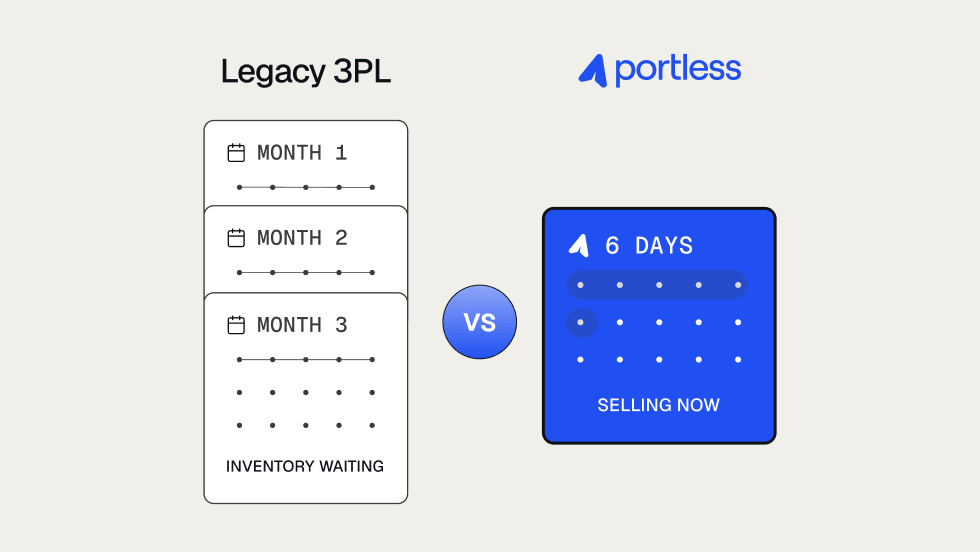
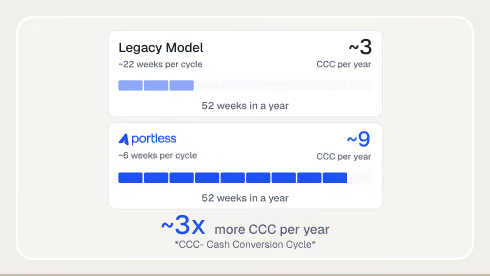
I love that. You very often see on DDC Twitter, you're one product away from changing the entire trajectory of someone's business. And you see that with brands like the Udi, on type of sweater, one type of like onesie could go from a zero to 100 million business. The ability to create a product with a prompt, obviously prompt, a tech pack, to sample, to then if Portless exists in this world, pick it up, get at your customer's door in five, five to seven days, get the feedback loop, buy more stuff. The ability for brands to have more shots on goal. And that's why I think Sheen is a 100 million business. The ability to create a product with a prompt, obviously prompt, a tech pack, to sample, to then if Portless exists in this world, pick it up, get at your customer's door in five, five to seven days, get the feedback loop, buy more stuff. The ability for brands to have more shots on goal. And that's why I think Sheen is a 60billion business. They're very good at having many, many shots at goal. And I think with Cavela and I would say Portless in that loop, the ability to have many shots on goal and to create from idea to product and all you need is one to go from one million to 10 million to 100 million.
Izzy Rosenzweig | 26:59
I love that. I love that future and I love what you're building.
Anthony Sardain | 27:02
It's really funny because on that note, what we've started to deploy for some of our existing customers is AI recommended products. So this is this idea that we can scan all of your product, current product offering, identify missing gaps and not only that, but pre-source those products. So you're a sleepwear brand. We can actually identify already, hey, you don't have a weighted blanket. We're going to build out specs automatically generated with the data that we have on what makes a good weighted blanket. Identify the right supplier, identify the pricing point, get everything in line, even generate high resolution images that match precisely your brand language and on click, just buy the sample and it can arrive at your doorstep in two weeks. And that's what we've seen is that we've launched new products for brands based on suggestion that have overtaken their flagship product.
Izzy Rosenzweig | 27:53
Oh, that's wild. So back in Shopify world and the software side, there's like product recommendations at Checkout. You're like, no, product recommendation for you to manufacture to potentially change the tricky of the business. Absolutely love this. I think there's a lot of people building this area, but you need a very unique background, which I think you have from a software and a supply chain perspective. People want to learn more. Where could they find you?
Anthony Sardain | 28:15
www.cavela.com. You can put in all information, create an account, source your first product, and we'll take it from there.
Izzy Rosenzweig | 28:21
Amazing. Anthony, thank you so much for being on the modern supply chain.
Anthony Sardain | 28:24
Izzy, thanks so much.
Izzy Rosenzweig | 28:29
Thank you for listening to The Modern Supply Chain. If you have questions about anything we talked about, you can find me on LinkedIn. And if you're interested in learning more about Portless, check out our website, portless.com. As always, hit that follow button so you don't miss an episode. See you next time.